The chemical lysergic acid diethylamide is actually not as difficult to synthesize as most of the folklore suggests. The synthesis is beyond the abilities of most dope “cooks”, that sorry breed which strives only for a “recipe” for a drug, with no desire to learn about what they are actually doing, and no appreciation for the art of synthesis. Yet the production of LSD is only a moderately difficult task for an average chemist. The high chemical potency allows LSD to be infused (“laid”) onto blotter paper for street distribution. It is sometimes counterfeited by certain other psychedelics that also happen to be potent enough to be laid onto blotter paper (while also being cheaper).
Mental Disorders
Eight subjects received a full 200-microgram dose of LSD while four others received one-tenth as much. Participants then took part in two LSD-assisted therapy sessions two to three weeks apart. Subjects who took the full dose experienced reductions in anxiety averaging 20 per cent while those given the low dose reported becoming more anxious. From the late 1940s through the mid-1970s, extensive research and testing was conducted on LSD. During a 15-year period beginning in 1950, research on LSD and other hallucinogens generated over 1,000 scientific papers, several dozen books, and six international conferences. Film star Cary Grant was one of many men during the 1950s and 1960s who were given LSD in concert with psychotherapy.
What Does An LSD Trip Look Like?

As a result of the growing popularity of the art-form, and high prices generated, Blotter Art is sometimes counterfeited. Another concern is the reproduction of copyrighted images without the consent of the artists. They may vary dramatically from one person to another based on a variety of factors such as body chemistry, age, gender, physical and emotional health etc. The effects of LSD also depend on the amount taken; the user’s personality, mood, and expectations; and the surroundings in which the drug is used. LSD blotter can also be taken sublingually (allowed to rest under the tongue for minutes). Liquid LSD is generally dropped straight onto the tongue (or onto sugar cubes which are then eaten).
Actively Recruiting LSD Clinical Studies
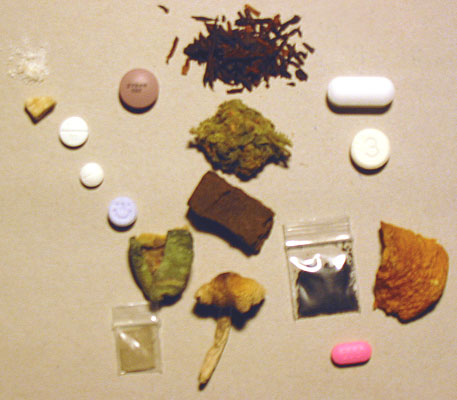
Whilst many people do take LSD for purely recreational value, others use LSD for spiritual purposes and self-exploration. If a loved one or friend takes LSD, keep a close eye on them to make sure they don’t have negative effects. If you or a loved one is showing signs of an overdose, it’s a medical emergency.
Urban Legends About Drugs
Carlos Castañeda was a reclusive author whose best-selling series of books include The Teachings of Don Juan, published in 1968. Both psychology professors at Harvard University, Timothy Leary and Richard Alpert administered LSD and psychedelic mushrooms to Harvard students during a series of experiments in the early 1960s. Years later, April 19 came to be celebrated by some recreational LSD users as Bicycle Day. Many LSD users are instead seeking to optimize fun instead of lasting positive benefits and safety, in which case some of these guidelines may not apply. For example, if optimizing more for fun and less for safety, a user may prefer not to use a blindfold and headphones, and may choose to drop acid at a festival or in nature instead of in a safe home environment.
Lysergic Acid Diethylamide
Peyote, a cactus native to parts of Mexico and Texas, contains a psychoactive chemical called mescaline. Native Americans in Mexico have used peyote and mescaline in religious ceremonies for thousands of years. As Hofmann rode home from work on his bicycle—World War II restrictions made automobile travel off-limits—he experienced the world’s first intentional acid trip. Albert Hofmann, a researcher with the Swiss chemical company Sandoz, first developed lysergic acid diethylamide or LSD in 1938. He was working with a chemical found in ergot, a fungus that grows naturally on rye and other grains.
Other professors in the Harvard Center for Research in Personality raised concerns about the experiments’ legitimacy and safety.6759 Leary and Alpert taught a class that was required for graduation and colleagues felt they were abusing their power by pressuring graduate students to take hallucinogens in the experiments. Leary and Alpert also went against policy by giving psychedelics to undergraduate students and did not select participants through random sampling. It was also ethically questionable that the researchers sometimes took hallucinogens along with the subjects they were studying.

Chemistry
- This decline was due to negative publicity centred on side-effects of LSD use, its criminalization, and the increasing effectiveness of drug law enforcement efforts, rather than new medical information.
- LSD was initially heralded as a breakthrough in psychiatry and research into mental illness until LSD “escaped” from the lab and came to be used recreationally during the sixties.
- One day in 1943, Hofmann accidentally ate a small amount of LSD, and noticed strange light patterns in the sky as he went home.
- Dr. Timothy Leary was an advocate of LSD use who believed that the chemical could be useful for psychology and spiritual pursuits.
- Acid Tests combined drug use with musical performances by bands including the Grateful Dead and psychedelic effects such as fluorescent paint and black lights.
LSD also was tried as a treatment for alcoholism and to reduce the suffering of terminally ill cancer patients. It was studied as an adjunct in the treatment of narcotic addiction, of children with autism, and of the so-called psychopathic personality. None of those uses were successful by the early 1990s, and most researchers concluded that there was no clinical value in the use of LSD. In the early 21st century, however, research into the treatment of alcoholism with LSD was revived, some researchers concluding that it might provide benefits.


Indeed, in much of the counterculture that uses these substances, entheogen has replaced psychedelic as the name of choice and we may expect to see this trend continue. 1-Propionyl-d-lysergic acid diethylamide (also known as 1P-LSD) is a novel psychedelic substance of the lysergamide class. It is structurally related to LSD and other novel lysergamides like 1cP-LSD, 1B-LSD, and 1V-LSD. It is thought to produce its effects by stimulating serotonin receptors in the brain, although the precise mechanism is not known. LSD was originally perceived as a psychotomimetic capable of producing model psychosis.2224 By the mid-1950s, LSD research was being conducted in major American medical centers, where researchers used LSD as a means of temporarily replicating the effects of mental illness.
Consequently, LSD euphoria can be described as “medium forced”, which is higher than tryptamines but not as high as some phenethylamine-based stimulants or entactogens. These visual extremes are often accompanied by intense changes in mood that can run the gamut from bliss to anxiety and fear. At one end of the spectrum, consumers revel in feelings of euphoria and a sense of peaceful certainty. On the other end, however, feelings of anxiety, dread, fear, or loss of control can take hold, causing a bad trip. Like many psychedelics, LSD can bring about a cascade of mental, emotional, and physical sensations. Individuals tripping on LSD often report visual distortions, colors appearing incredibly saturated, and numbers or words seeming to slide off pages.
These concerns were printed in The Harvard Crimson, leading the university to halt the experiments. The Massachusetts Department of Public Health launched an investigation that was later dropped but the university eventually fired Leary and Alpert. In 1977, Senator Ted Kennedy conducted congressional hearings investigating MKUltra. As a result, four subpoenas were issued by Senator Kennedy, one by his subcommittee on Health and Scientific Research.17 A former CIA employee, whose name is known as Walter Pasternak, was noted for “hiding from investigators”17 stating that he would return after 24 hours.
When you take LSD, it reacts with these receptors to trigger the hallucinogenic effects within your senses. Researchers believe this reaction is also what causes the long-lasting high. Because LSD is a type of synthetic substance and relatively hard to make, the labs rely on experienced chemists to make the drug. Unlike unadulterated LSD blotters, which are usually only mildly bitter or slightly metallic as a byproduct of the blotter paper’s ink, mimics are described as having a “metallic”, “numbing”, “chemical-like”, or “extremely bitter or sour” taste. It is advised to immediately spit out any blotters that have a strong bitter taste that exceeds a reasonable level.
Psychedelic Therapy Centers
Within the first hour after taking LSD, you might start seeing things and experience mood swings with extreme highs and lows. Your sense of time, space, color, and even your own body can get twisted. Internationally, the UN 1971 Convention on Psychotropic Substances requires its parties to prohibit LSD. Hence, it is illegal in all parties to the convention, which includes the United States, Australia, New Zealand, and most of Europe. LSD also exhibits cross-tolerance with all psychedelics, meaning that after the use of LSD, all psychedelics will have a reduced effect.
On March 27, 1965, Beatles members John Lennon and George Harrison (and their wives) were dosed with LSD without their permission by their dentist, John Riley. Lennon mentioned the incident in his famous 1970 Rolling Stone interview, but the name of the dentist was revealed only in 2006.59 On August 24, 1965,60 Lennon, Harrison and Ringo Starr took their second trip on LSD.61 Actor Peter Fonda repeatedly said “I know what it’s like to be dead” to John Lennon during an LSD trip. John Lennon wrote “Lucy in the Sky with Diamonds”, a fanciful song which many assumed referred to LSD, although he always denied the connection as coincidence.