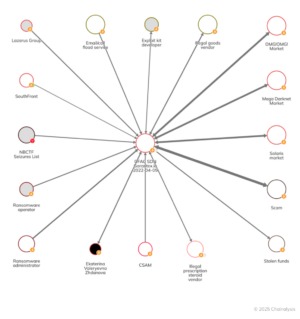
As a decentralized platform operating on the Tor network, Mars darknet marketplace ensures your activity remains fully anonymous, with every transaction encrypted and managed through secure smart contracts. Whether you’re browsing the Mars marketplace website or accessing it through a Mars market onion mirror, your experience remains consistent, private, and censorship-resistant. In this paper, we investigated the OBM infrastructure through an in-depth analysis of its generative mechanisms. Firstly, we advance the understanding on OMs by analyzing OBMs, a unique digital infrastructure characterized by the absence of formal rules, legal protection and social legitimacy and the resulting negative global impact of its social outcomes.
Explore The Products
Platforms like Empire Market 3.0 have implemented advanced feedback systems, allowing users to evaluate vendors based on product quality, delivery speed, and communication. This transparency fosters a reliable trading environment, encouraging repeat transactions and long-term relationships between buyers and sellers. Our study also has important practical implications to face the societal challenges of civil security. We empirically support conjectures on the dynamics of innovation in illegal and online contexts and we advance previous studies by analyzing the phenomenon from an IS perspective. By looking at OBMs as a digital infrastructure we integrate the social and architectural aspects into a single view.

Drugs lead the pack—weed, pills, some synthetics—but digital goods like hacked logins are gaining, tying into Telegram’s side gig boom. For 2025, they’re teasing AI-powered search—could make digging through listings a breeze, which I’m hyped for since their catalog’s already hefty. The site’s unique—loads fast, looks sharp, and vendors get treated right, keeping turnover low. I’ve used it; shipping’s discreet—plain packages or DeadDrops—and uptime’s been flawless, rivaling Abacus. It’s not as community-driven as Bohemia, but the polish makes up for it—feels like a pro operation, not a fly-by-night deal.
Why Are All The Darknet Markets Down
Addressing this issue, researchers 7 have successfully demonstrated the use of LDA (Latent Dirichlet Allocation) and a non-parametric HMM (Hidden Markov Model) to spot anomalous behaviors. Their techniques identified popular discussion topics in the Darkweb and diagnosed a state transition or change in topics bound to happen around any unique event. Going beyond the topics of interest, the need to identify perpetrators directly benefits law enforcement. While authorship identification using Artificial intelligence techniques has been explored in the literature, this has yet to be attempted for Darkweb.
While many prior studies have demonstrated the popular use of the Darkweb for illegal services, a systematic literature review and bibliometric analysis of 49 papers in criminology and penology was carried out 24. Their study provides valuable insights into the evolution of Darknet-related crimes, including prolific authors, contributions from the Global South, and a need for balance in publications between regions. Six recommendations for future research in this field are also provided, including policing interventions. We already discussed the role of the OBMs infrastructure as a powerful resource for enabling the commerce of illegal goods. In OBMs marketplaces, hackers develop and sell new versions of malware and exchange information with peers through secure communication channels.
Size Of Listings
It also challenges the current understanding on the role of institution-based trust in social commerce (Lu et al., 2016). In fact, it shows that proper transactional conditions in e-commerce can be created without the involvement of authorities and trusted third parties. Future studies may investigate these issues further to see how trust emerges as a combination of transaction, innovation and resilience behaviors, leading to a new definition of trust in social commerce (McKnight et al., 2002). The role of institutional structures can also be empirically explored in online contexts characterized by adverse conditions (Gefen & Pavlou, 2012). Despite these challenges, the darknet market era is likely to continue to evolve and adapt.
All Markets At A Glance
The increased use of DeFi comes amid tight regulations on centralized exchanges. With stricter Know Your Customer (KYC) and Anti-Money Laundering (AML) measures, illicit actors are facing greater challenges when attempting to cash out. Furthermore, law enforcement worldwide has stepped up its efforts, seized assets, and disrupted key money laundering networks. Research on the Darkweb could provide insights into cybercrime, illicit trade, and other activities that could undermine peace and stability.
- While hard statistics are scarce, darknet markets have continued gradual growth for years.
- We define “platformization” as a process where the OBMs infrastructure enables hackers to sell new digital goods and admins to enhance security and efficiency of transactions by implementing complementary features crowdsourced from external communities.
- For instance, a recent London Metropolitan Police (MET) investigation examined the transactions of a seller profile on a DWM10.
- We showed that a small fraction of traders is responsible for a large fraction of the trading volume, and by analysing the networks of buyers and sellers, we found different resilience regimes.
2 The Establishment And Evolution Of OBMs Marketplaces

Researchers should carefully consider the potential implications of their research and take steps to minimize any potential harm or negative consequences. The connection between the Darkweb and the SDG is indirect, as the Darkweb is primarily used for illegal activities such as cybercrime, the sale of illegal goods, and the spread of misinformation. These activities can negatively impact the achievement of many of the SDGs, such as SDG 1 (No Poverty), SDG 2 (Zero Hunger), SDG 3 (Good Health and Well-being), SDG 4 (Quality Education), and SDG 16 (Peace, Justice and Strong Institutions). The sale of illegal goods on the Darkweb can fuel organized crime, contributing to poverty and food insecurity and undermining public health and safety. Additionally, spreading misinformation on the Darkweb can negatively impact education and public health outcomes, fuel conflict, and undermine peace and justice. Therefore, research into the Darkweb and its impact on human behavior is crucial for understanding the challenges and implications of achieving the SDG.
The Role Of Crypto Anonymity Tools

The psychological impacts on individuals who use the Darkweb for illegal activities, such as anxiety and stress, should also be considered. Incorporating human behavior and psychology elements into Darkweb research can provide a more comprehensive understanding of the phenomenon and inform more effective solutions. Researching the Darkweb can raise ethical considerations, particularly if it involves studying illegal activities or vulnerable populations.
Established after the closure of Canadian Headquarters, this market tailors its offerings—narcotics, fake IDs, fraud guides—to local needs and laws. With listings denominated in both Bitcoin and Canadian dollars, and a valuation around $3 million, it provides a microcosm of how local cybercrime ecosystems thrive. The rationale behind choosing the Scopus database for sourcing bibliographic data in this study primarily rests on its capacity to meet stringent quality standards for indexation.
Early Warning Signals For Predicting Cryptomarket Vendor Success Using Dark Net Forum Networks
Law enforcement will continue to adapt, but so will developers, cybercriminals, and privacy advocates. The darknet market ecosystem operates as a complex web of interdependent participants. Each element serves specific functions that collectively maintain the operational integrity of these platforms. In Grand Theft Auto Online, players who purchase warehouses and garages for illicit cargo and stolen cars can buy/steal and sell them through trade on the “SecuroServ” syndicate website.
The increased popularity of social media has extended the scope of OMs and added new collaborative and user-centered functions, leading to the rise of social commerce (Huang & Benyoucef, 2013). In social commerce, the delivery of e-commerce activities and transactions is influenced by community interactions such as, for instance, the rating and recommendations issued by users on goods and vendors (Liang & Turban, 2011). Therefore, we can conclude that OMs are socio-technical structures that facilitate coordination and transactions among buyers and sellers through online media. Many buyers and sellers have migrated to encrypted messaging apps like Telegram and Session, where trades occur in private, decentralized groups with fewer digital footprints. Others are experimenting with peer-to-peer marketplaces and blockchain-based escrow platforms that don’t rely on centralized servers. This shift marks a clear move toward decentralization and smaller, more agile networks, making it harder for law enforcement to take down entire ecosystems.