The case of Ross Ulbricht and Silk Road raises significant legal and ethical questions. Ulbricht’s defense argued that he had transferred control of the site to others, but this claim was not accepted by the court. His life sentence and $183 million fine sparked debates about the proportionality of his punishment and the broader implications for internet freedom and privacy. The involvement of corrupt federal agents in the investigation further complicated the narrative, casting doubt on the integrity of the legal process. Ulbricht’s early writings on the ideas behind Silk Road emphasized his desire to create a free and anonymous marketplace, to “use economic theory as a means to abolish the use of coercion and aggression amongst mankind,” according to a public LinkedIn post.
Silk Road: A Deep Dive Into The Dark Web’s Infamous Marketplace
Ross Ulbricht was deep into his regular drum circle when he spotted her. As Ross slapped the hide on his djembe, a West African drum, Julia Vie sat across the circle. She had a head full of curls, light brown skin, and dark brown eyes. The drum circle was assembled on a lawn at Penn State, where in 2008 Ross was working toward a master’s degree in materials science and engineering. Julia was 18, a free-spirited freshman, and when she noticed Ross she felt a powerful attraction. Not long after, Julia visited Ross’ campus office, where they couldn’t help but kiss and fall into a carnal heap on the floor.
Our Network
It was accessible only through tor, a special network designed to preserve user anonymity. As his site grew, the government took notice, and Ulbricht impishly reveled in the attention. As some U.S. senators called for Silk Road to be shut down, Ulbricht made a chipper comment to Bates in a chat about how yet another national media outlet had mentioned his grand blow for freedom. Meanwhile, federal agents in Maryland and Chicago were on his trail. By July 2013, the feds were so inside the Silk Road system that an agent was able to assume the online identity of a member of the Silk Road staff.
Silk Road Assets And Bitcoin
He sits across from his friend René Pinnell, recording for StoryCorps, a nonprofit that invites anyone to share their life experiences. Ross and René thought the world should know more about them, so they entered the StoryCorps booth, closed the door, and spent half an hour with each other and the camera. The more Force pretended and partied, the easier it was to inhabit the part. But when he was at some nightclub hunting for drug deals, liquor flowing, surrounded by girls, it was hard to believe just how comfortable he felt. Tarbell and his fellow cybercops occupied a couple of dozen spots toward the back of the bullpen, fanned out around a core group of desks called the Pit. This was prime real estate, where the cool kids among the FBI’s computer clique sat.
- ULBRICHT sought to anonymize transactions on Silk Road in two principal ways.
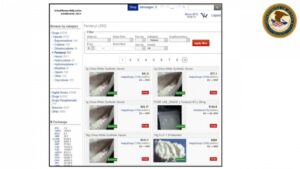
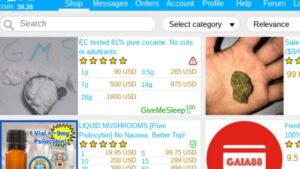
- Dark web markets are notorious for selling a variety of illegal goods.
- That’s how he wound up in the Baltimore office, living in a suburban two-story with a big, solid oak tree in the backyard.
- United States President Donald Trump has pardoned Ross Ulbricht, the imprisoned founder of the dark-web black market Silk Road.
- He posted online about his disenchantment with science—and his new interest in economics.
Who Is Ross Ulbricht?
Before the Silk Road marketplace, Bitcoin was mainly a novelty, with the first Bitcoin transaction famously being 10,000 BTC for 2 pizzas. Shortly after the Silk Road darknet market took off, Bitcoin reached $266 per coin, and the Silk Road marketplace became a $200 million operation. Much of the allure of Silk Road and other dark web markets is anonymity. But even if your online activity is private, security is still essential to avoid the threats that lurk online. Avast Free Antivirus is powerful threat-detection and anti-malware software that will help keep you safe online. The general volatility of darknet markets has led to calls for further decentralization of transactions to protect both buyers and vendors.
Protect Yourself Against Online Threats
While Tor provided anonymity, it also attracted the attention of law enforcement agencies, who viewed it as a haven for criminal activity. In addition, Ross also used his personal laptop to run the site, which made it easier for authorities to track him down. He envisioned the site as a “means to abolish the use of coercion and aggression amongst mankind,” according to his LinkedIn page. Republican Rep. Thomas Massie, who campaigned for Ulbricht’s freedom, celebrated news of his release on X (archived), while other users on the platform decried Trump’s pardon.
Triumphant Trump
The dark web isn’t illegal, because it’s essentially just an anonymous web browser providing a platform for various websites. The Silk Road was illegal because it was primarily a hub for the sale and distribution of illegal items and facilitated other unlawful activity. After two and a half years running the booming anonymous narcotics bazaar known as the Silk Road, the drug kingpin who called himself the Dread Pirate Roberts has allegedly been unmasked. The Silk Road Dark Web serves as a cautionary tale about the challenges posed by anonymity in online dealings. It has sparked conversations about morality, legality, and what the future of digital commerce might hold as the boundaries between the visible and dark web continue to blur.
During his trial, prosecutors said Ulbricht’s website, hosted on the hidden “dark web”, sold more than $200m (£131m) worth of drugs anonymously. Ulbricht was found guilty of charges including conspiracy to commit drug trafficking, money laundering and computer hacking. Ulbricht was convicted in 2015 in New York in a narcotics and money-laundering conspiracy and sentenced to life in prison. He also described it as “the most sophisticated and extensive criminal marketplace on the internet” at the time. He alleged Ulbricht made tens of millions of dollars through the site.
- Other, more limited, markets exist on the dark web to trade sensitive data that cybercriminals can use to commit fraud.
- Once inside the site, government agents created fake personas to interact with the site’s administrator.
- “They trafficked in – anything you could get in the black market – poisons, things like that,” says Vincent D’Agostino, an FBI agent with the cyber division.
- “Ross Ulbricht and his family are deeply and eternally grateful to President Trump for his extraordinary act of grace in granting Ross a full and unconditional pardon.
Dream Market was founded in late 2013, and officially shut down on April 30, 2019. A prolific Dream Market vendor was arrested in August 2017 with $500,000 in cryptocurrency on his laptop. The dark web marketplace allegedly amassed up to $168 million in annual revenue. The Silk Road website was an anonymous internet marketplace active from January 2011 to October 2013. Accessible through encrypted dark web browsers such as Tor, Silk Road was known as a hotbed of illegal activity facilitated by cryptocurrency, and served as one of the initial use cases for Bitcoin. Even if you aren’t perusing darknet markets, true anonymous browsing will keep you safe from prying eyes — such as snoops, your ISP, and hackers.
That’s how he wound up in the Baltimore office, living in a suburban two-story with a big, solid oak tree in the backyard. But now here he was, within sight of that oak, his family in the next room, venturing again into the drug world as someone else. The anonymity afforded by the Internet provides perpetrators with an environment within which they can operate with a low risk of detection. Nowhere is this more pronounced than in Darknet, which is considered the ‘underworld’ of cyberspace. Darknet consists of a collection of non-indexed domains; accordingly, these sites cannot be found using search engines like Google or Bing. To enter Darknet, Tor (the Onion Router), a privacy-enhancing application originally created by the USA Naval Research Laboratory, is used.
Early Days
Within Tor, customers could use the Silk Road dark web link to anonymously connect with vendors and buy illegal goods with cryptocurrency. Through a combination of data anonymization technology, a trading platform, and a feedback system, Silk Road created a haven for drug traders. The site was accessible only through a network known as Tor, which exists mainly to anonymize user data and activities online. Tor obscures users’ addresses so they appear hidden from unwanted parties looking to surveil the users’ transactions and activities—in other words, Silk Road, Tor, and cryptocurrency were the ultimate privacy toolkits for illegal operations. The Silk Road black market could only be accessed by buyers and sellers using the Tor web browser and a compatible search engine.
According to the backstory Force had created for Nob, his criminal repertoire included enforcement and collection talents, so he acted the part. Sitting in the Marriott, Force received a PDF of the target, opened it, and discovered a scan of Green’s driver’s license photo. Then he looked across the table, where at that very moment Green was half-asleep. He could be a hard taskmaster, haranguing Green for being even one minute late to an appointed time on TorChat. But other times DPR was full of generosity, staking Green in a poker tournament (and being unfazed when Green lost it all).
A Tor user’s Internet traffic is routed through a worldwide network of volunteer computers to conceal the user’s location and Internet usage. Communications via Tor are also encrypted to conceal the contents of communications to all parties except for the intended recipient. As a further measure to protect the anonymity of its users, Silk Road required all transactions to be conducted in crypto-currency bitcoin, an electronic untraceable peer-to-peer currency that has no association with banks or a government.