This further complicates monitoring efforts because now you need to search for the related Telegram channels and track activity there and on the marketplace itself. We deliver contextualized, actionable intelligence through our dedicated platform or API integration, ensuring that you can respond effectively to darknet threats. An award-winning cybercrime threat intelligence firm, KELA’s mission is to provide 100% real, actionable intelligence on threats emerging from the cybercrime underground, to support the prevention of digital crimes. When one goes down, two more emerge with new ideas, better technology, and greater difficulty to track.
Crime Index
Nevertheless, the police continue with attempts to prosecute traffickers and recover artefacts. They seized a large number of artefacts, including ancient figurines and jewellery, as well as firearms and metal detectors. Torzon Market has established itself as a significant player in the darknet ecosystem, offering a secure, user-centric platform for anonymous trading. Its commitment to privacy, diverse product offerings, and robust security measures make it a preferred choice for users seeking discreet transactions within the darknet. Based on our observations from analysis on dark web data using Lunar, we’ve identified the top 7 marketplaces on the dark web in 2025.
Criminal Complaint Against Former Director Of A Branch Of NP “National Forests” In Macedonia

Finally, the issue should be seen and addressed within the broader context of disrupting illicit economies. Similarly, UNESCO has taken the position that the illicit trafficking of cultural property contributes significantly to the funding of terrorism, organized crime, and money laundering. In 2017, the UN Security Council formally recognized that threats to cultural heritage are a major security issue that the international community has a direct responsibility to protect against. Given the security dynamics in the Western Balkans regarding organized crime, international terrorism, and ongoing geopolitical competition, the region should make addressing the illegal trade in artifacts a priority.
Dimal Basha Is Convicted Of Defamation, The Court Imposes A Fine Of 25 Thousand Euros And A Public Apology

The new coalition of EU institutions is expected to facilitate the fight against this type of crime, increase the harmonization of legal instruments, increase the monitoring of online markets, as well as increase awareness among the population. Certain types of NPOs, particularly those involved in social/humanitarian, cultural/educational and religious activities, were identified as having a low to medium inherent risk of terrorist financing. Approximately 87% of NPOs meet the FATF NPO definition and are classified as low risk, while the remaining 13% are classified as low to medium risk. The role of civil society in the fight against IFFs is important becaue it contributes to increasing awareness, conducting studies and uncovering cases. For example, the Balkan Investigative Reporting Network is a network of non-governmental organisations promoting freedom of speech, human rights and democratic values in Southern and Eastern Europe, including North Macedonia. In the rebuilding of Skopje, financial schemes of forced credit and elusive wealth became entangled with the formal and existential processes at the core of Macedonia’s political life.
- The beat of sledgehammers covered networks of racketeering, forced acquisition, political violence, arrests, indiscriminate wiretapping, and intimidation.
- They seized a large number of artefacts, including ancient figurines and jewellery, as well as firearms and metal detectors.
- Refers to a state’s judiciary’s power to effectively and independently enforce judgments on organized crime-related cases.
- Determined to prevent a (fragile) coalition from creating a new government, the VMRO–DPMNE tried to stall, boycott, and ultimately physically occupy the Macedonian Parliament by enlisting the help of an angry mob of thugs and overzealous nationalists.
Primary Risks For Users Of Darknet Marketplaces
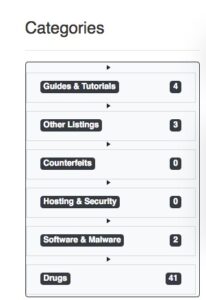
The figure below shows the threat level of money laundering from predicate criminal offences. Dark markets are online platforms on the darknet where illegal goods and services are traded. You can find drugs, weapons, stolen data, and counterfeit documents on these marketplaces. They operate similarly to regular e-commerce sites but use cryptocurrencies for transactions.
Country Profiles
- Wounded, tired, doubtful—contemporary Skopje is recovering from a ten-year-long construction hangover.
- Assistance provided to victims of various forms of organized crime, including initiatives such as witness protection programs.
- Personal and financial data are commonly sold on dark markets, facilitating identity theft and fraudulent activities.
- The investigators found artifacts hidden in the homes of the accused and unveiled a network of collaborators from Greece, Turkey, Albania, Croatia, Serbia, and the US, who sold the artifacts to interested buyers.
- Legally, they are limited to observing publicly accessible areas using tools like the Tor browser, without engaging in unauthorized access or illegal transactions.
- For a decade, illiquidity allowed the Macedonian government to monopolize the money supply and force businesses and individuals to embrace illiberal politics.
Abacus Market appeared on the scene in 2021 and quickly became one of the heavyweights among English-speaking markets on the dark web. The categories are well organized, ranging from drugs and fraud to digital products, guides, and malware.What really sets it apart is its focus on security and usability. It supports PGP encryption, two-factor authentication (2FA), alerts against fake sites (antiphishing), and a verification system for sellers. Its interface is easy to navigate, and it has a reliable escrow system, as well as allowing payments with Bitcoin and Monero. The darknet is used for anonymous communication, accessing censored information, and protecting privacy. You can access it for legitimate purposes like whistleblowing and freedom of expression.
Private Sector
Despite years of stagnation and corruption, the current government in North Macedonia has introduced a period of relative political stability and an improvement in democratic governance. The government has also begun to address the criminal capture of the state by gradually restoring appropriate checks and balances while increasing transparency. Despite starting with relatively poor levels of corruption and accountability, the new government has taken steps to increase transparency − for example, all ministers have to declare their spending. North Macedonia is a transit and destination country for illicit arms, albeit on a small scale. Arms are easily accessible due to the insurrection in 2001, and imported weapons usually enter through Kosovo and Albania. Workshops converting alarm weapons have been found in recent years and registered companies have been discovered selling firearms by falsifying documents to illegally export them.

If you access illegal content or participate in criminal transactions, you face legal consequences. The legality depends on your activities and your country’s specific laws regarding darknet use. Beginning in September 2021, Abacus Market has established itself as one of the leading dark web marketplaces.
There is little evidence to suggest the state is doing enough to establish mechanisms to prevent involvement in organized crime. The country’s state commission for corruption prevention was not functional for a long period of time and has no investigative powers, and while the legislative framework is in line with the EU, lack of implementation hinders progress. Collusion between state-embedded actors and criminal groups is high, and there appears to be a certain level of criminal capture of state institutions and powerful politicians.
According to the Assistant Director-General for Culture at the UN Educational, Scientific and Cultural Organization (UNESCO), the illicit trade reportedly represents five percent of the estimated €45 billion antiquities market. This trend, according to UNESCO, is ongoing, not just in established cultural heritage sites but also in places ‘where we didn’t know antiquities existed. Yes, the darknet still exists and continues to operate through networks like Tor, I2P, and Freenet. While law enforcement regularly shuts down illegal marketplaces, the underlying infrastructure remains functional. New darknet sites and markets continuously emerge to replace those that get shut down.

While the non-profit sector is not mandated to comply with AML/CFT legislation, it can contribute by participating in projects that enhance technical and human capacity. Such projects include the development of instructions, guidelines and indicators for the identification of suspicious transactions. Notable examples include projects by non-profit organizations such as KONEKT and Democracy Lab Macedonia, which have successfully worked with obliged entities to raise awareness of IFFs. North Macedonia has the lowest rate of pre-trial detention in the region, suggesting good judicial capacity to process criminal cases. Despite the rarity of hard rulings for high level crimes, the ability of the special prosecutor’s office to carry out its role suggests an improvement in this area. However, its reputation was tarnished by a high-profile scandal and the institution ceased to exist in early 2020.
Exploring The Use Cases Of Darknets & Dark Markets
They follow a risk-based approach, in line with international best practice, and intensify supervision for high-risk sectors and issues. In 2024, there were entities responsible for the prevention of money laundering and terrorist financing. Despite adoption of legislation based on international standards, risk assessments and other measures related to AML/CFT, supervision in the context of IFFs seems to be missing.
To enhance national capacity in handling complex criminal cases, a project has been launched to develop the Law Enforcement Records Management System (LERMS). Trafficking in cultural property has long been a problem for law enforcement in North Macedonia. In 2010, the authorities arrested 48 people, including local politicians and archaeologists, in a nationwide operation against the illegal antiquities trade. Between then and 2014, the police carried out several major operations to expose artifact smugglers. The operations ‘Phalanga’ and ‘Apollo’ brought down a network of organized crime schemes that, in addition to illegally procuring archaeological and historical objects, were offering icons for sale that had been stolen from churches.