Among those who may purchase weapons on the black market are people who are unable to pass the legal requirements for registration—convicted felons or those suffering from mental illness for example. The black market is distinct from the grey market, in which commodities are distributed through channels that, while legal, are unofficial, unauthorized, or unintended by the original manufacturer, and the white market, in which trade is legal and official. Finally, a contested example of a possible solution to reduce organ scarcity and avoid black market abuses is to allow payments or other types of rewards for deceased and living organ donation to increase organ donation rates. To test the efficacy and morality of these schemes, strictly controlled experiments would be needed.

Illicit Drugs
The penalties against money laundering are often severe, so legitimate businesses must be careful to avoid accidentally participating in it. She is interested in the underlying economics of social issues, international law, sustainable development, and the preservation of cultural heritage. In the vast world of commerce, there exists a hidden realm that operates beyond the boundaries of legality – the infamous black market.
Illicit Oil Trade: Funding Non-State Actors
Consumers are often willing to overlook the illegality of a black market transaction if they feel that the good or service is “harmless.” This is often the case with illegal prostitution and also applied to alcohol sales during prohibition. Although some people think that most illegal transactions are relatively harmless, the money generated is often used for nefarious purposes. The mafia in the U.S. thrived during prohibition, resulting in bloody battles over turf and profits. Governments combating illegal markets spend vast fortunes fighting organized crime and racketeering, and lose millions in tax revenues from the prohibited good. One of the significant economic consequences of trade-related black market activities is the loss of tax revenue for governments. Illicit trade, such as counterfeit goods, results in the evasion of taxes and duties that legitimate businesses are required to pay.
Global Examples Of Trade-Related Black Market Activities

As an energy hub, Turkey is strategically situated for the illegal trade and lost an estimated US$5 billion in tax revenue in 2017. An uptick in smuggling oil and other refined products began 2014, when ISIS took control of major Syrian and Iraqi oil fields. Moreover, black money makes a nation’s financial health seem weaker because it’s hard to measure. Since unreported earnings are not part of a country’s GNP or GDP, estimates of savings, consumption, and other macroeconomic data can be misleading, impacting planning and policymaking. With transactions increasingly occurring on the dark web, law enforcement faces greater challenges in combating these activities. Cryptocurrencies like Bitcoin have facilitated anonymous transactions, making it even more difficult to track and curb illegal operations within the black market.
By promoting transparency, fostering international cooperation, and raising awareness, efforts can be made to address the economic consequences and protect the integrity of legal trade. Trade-related black market activities have far-reaching economic consequences, impacting various aspects of the economy, government revenue, and consumer well-being. These consequences include tax revenue losses, undermining legitimate businesses, and consumer health and safety risks. Wildlife trafficking involves the illegal trade of endangered or protected species and their products.
Addressing A Complex Crime
As another example, consider a property buyer who purchases land valued at $200,000. If the buyer only reports $50,000 on the books and pays $150,000 under the table, then there is a black money transaction worth $150,000. The sellers in both examples have earned money from legal sources but evaded taxes. Other critics have called for informational campaigns to increase awareness—both from governments and humanitarian NGOs—of this overlooked yet pervasive illegal market. In the midst of this intricate web, consumers find themselves navigating ethical dilemmas as they make choices that can either perpetuate or discourage illegal activities within the black market.
Human Trafficking And Open Advertising
Even if current sellers are arrested, or a physical market is closed down, the potential for new sellers to appear is likely because of the ability to make outsized profits in the black market. Black markets function as they do because of the basic economic principle of supply and demand. Supply refers to the quantity of goods and services that businesses are willing and able to produce at any given time. Demand refers to the quantity of goods and services that consumers are willing and able to buy at any given time.
- Typically, such activities are referred to with the definite article as a complement to the official economies (e.g., “the black market in bush meat”).
- This is a black market that has spiralled ‘out of control’, robbing taxpayers and legitimate retailers of billions of dollars.
- In addition to fueling illicit and unethical organ transplantation, transplant tourism negatively impacts areas of social justice, poverty reduction, and equity, enhancing and deepening the economic differences among countries.
- As these refining countries have not imposed similar sanctions on Russian oil, they are legally able to import the oil, refine it into products such as jet fuel and diesel, and then sell the products across Europe.
- Economists have long understood that the shadow economy is linked to ‘tax morale’.
Animals And Animal Products
Nevertheless, the adaptability of the black market remains a significant challenge, as it evolves in response to changing circumstances and technological advancements, requiring continual innovation in the fight against its operations. The European Union has imposed sanctions on Russia since 2014, after the annexation of Crimea and the non-implementation of the Minsk agreements. Aiming to punish Russia for its aggression towards Ukraine, these economic sanctions include import and export restrictions, economic caps, and visa measures.
Wildlife Trafficking
- Cryptocurrencies like Bitcoin have further complicated the situation by providing a means for anonymous financial transactions (Investopedia).
- Other opportunity costs include increased financial risk premiums for investors with billions of dollars lost annually due to illegal bunkering, pipeline tapping, ship-to-ship transfers, armed theft, adulteration of fuel and bribery.
- Estimates vary, but studies show that the U.S. underground economy is 11% to 12% of GDP, making the underground economy approximately $2.5 trillion in 2021.
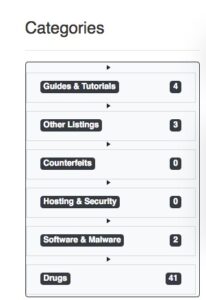
- Examples of trade-related black market activities include the sale of counterfeit goods, illicit drugs, weapons trafficking, human trafficking, and wildlife trafficking (Wikipedia).
- While most people may shun an underground market because they consider it sleazy, there may be rare occasions when they have no choice but to turn to this necessary evil.
- The United Nations Office on Drugs and Crime (UNODC) estimates there were around 700 victims trafficked for organ removal between 2008 and 2022.
HMRC no longer makes any serious attempt to estimate the size of the black market. Its most recent guess suggests that a mere 6.9 per cent of cigarette sales are ‘non-duty paid’. Anyone who smokes or has seen cigarette packs in public places knows that this is a fantasy.

Firstly, the origins and evolution of this clandestine economy can be traced back to various historical contexts, including wartime rationing and prohibition eras. Over time, it has grown in complexity and scope, driven by factors such as economic instability, burdensome taxes, and strict government regulations. Today, the black market continues to adapt and expand, leveraging technology and the dark web to facilitate its illicit transactions. Black market refers to a market for certain goods or services whichare routinely traded in a discreet or underground manner contrary to thelaws or regulations of the government in power.
Changes in political and economic life, along with revolutionary technologies in the hands of civilians, have dissolved the sealants that governments traditionally relied on to secure their national borders. At the same time, the market-oriented economic reforms that swept the world in the 1990s boosted incentives to break through these sealants — legally or otherwise. Not only did the hold of governments on borders weaken, but the reforms amplified the rewards awaiting those who were prepared to break the rules.
The most common source of black money is the black market or underground economy. Activities in the black market may include selling prohibited drugs, gunrunning, terrorism, and human trafficking. Black market activities also involve less severe offenses, such as the sale of counterfeit goods, stolen credit cards, or pirated versions of copyrighted material.