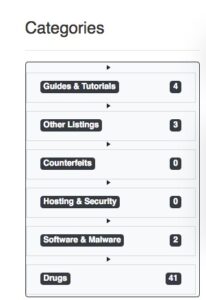
It’s where anonymity reigns supreme and the boundaries of legality blur. Within this shadowy realm, cybercriminals lurk in the shadows, conducting illicit transactions and exchanging forbidden knowledge. It’s a world that exists beyond the reach of traditional law enforcement, where the line between right and wrong becomes hazy. While the dark web may intrigue some with its air of mystery, it serves as a reminder of the darker side of human nature and the constant battle to maintain a safe and secure online environment. Businesses can also limit risk by deploying strong security controls. These include robust data encryption, threat detection solutions, and regular review of security measures.

Similarities And Differences
The dark web’s anonymity draws users who need private communication, want to share sensitive information, or seek access to content censored in certain regions. But while it can support legitimate uses such as whistleblowing or journalistic sources, it’s also a hub for illegal activity. Criminals use it to buy and sell stolen data, commit identity theft, or conduct illicit transactions. Unlike the publicly accessible surface web, the deep web includes sites requiring login credentials but is still accessible via traditional browsers.
Related Content
One example is a website called the silk road which was on a darknet called TOR, used to sell drugs, and was taken down by the FBI. The Internet is an enormous and complicated information network; the overwhelming majority of that is simply not available to any average user. The part that we are most familiar with is really just what we might think of as the surface web. This includes sites we regularly visit, be it our social media networks, news outlets, or e-commerce sites – indexed by traditional search engines like Google or Bing.
The Risks Of Accessing The Dark Web
Unlike the dark web, which is deliberately obscured by layers of technology, the deep web exists just below the surface web. The majority of the deep web consists of regular websites that require users to create an account before they can be accessed. The dark web was originally a domain exclusively used by cybercriminals and governments.
Deep Web Vs Dark Web: What Is The Difference?
Understanding how these parts of the internet work helps you protect your security and privacy as you navigate them. On the other hand, the deep web is that hidden part of the internet, which is personal and open to its respective owners. For instance, Harvard University received a bomb threat via a disposable email in December 2013.
Safely Accessing The Deep Web And Dark Web
The dark web is a part of the internet that provides anonymous and secure communication channels that can only be accessed with a special browser called Tor. Going on the dark web has to be intentional since it requires a user to have specific tools to access it, such as the Tor browser and a Virtual Private Network (VPN). However, even in places where it is technically illegal, there isn’t much the authorities can do to stop people from accessing it. Remember, the deep and dark web is encrypted and only accessible in specific ways. Due to this design, it is difficult for governments to stop it even if they legally prohibit it.
Dark Web Vs Deep Web
Most of what you see in search results is just a small slice of the internet. In fact, only about 4% of the web is indexed, meaning it shows up in standard search engines. Of course, hackers and criminals aren’t the only people who need secrecy.
Table Of Contents
A company using a cloud storage service probably won’t make its single sign-on (SSO) page public, but stored data still remains part of the deep web since the storage service is connected to the Internet. Greater anonymity allows cyber criminals to do their thing, and the rise of the Bitcoin cryptocurrency which allows incognito payments, has also contributed to illegal trade. Deep and Dark Web are two different concepts, but easy to understand. The Dark Web is not illegal to use or consists entirely of illegal elements.
How To Access
Dark net websites can only be accessed using designated browsers like Tor or I2P, and they’re different from those you come across on the surface web. For one, they usually don’t have any recognizable URLs, just a string of numbers and letters. Tor anonymizes your online activity by passing your connection through at least three points, making it a lot harder to trace anything back to you. There are several tools used for reaching these parts of the internet. The TOR (The Onion Router) maintains the most popular tool for Dark Web access. Law enforcement routinely shuts down and prosecutes sites and people doing illegal things on the Dark Web.
- This visible portion includes all websites and resources that search engines can discover and index.
- So unless you have the correct login details for certain information on the deep web, it can’t be accessed.
- The dark web is the smallest part of the internet ecosystem—even smaller than the surface web.
- TOR can access regular websites also, a website on this network has .onion address.
Normally, search engines will not turn up these types of search results if you try to access them. Sooner or later, some of your data will spill over to collections available for sale on the dark web. What you can do to protect yourself is to make sure that data is not accurate anymore, not detailed enough to cause harm, and that you have multi-factor authentication enabled everywhere you can use it.
On the other hand, the dark web is a small subset of the deep web that uses encryption to stay hidden from the surface web. These “entry nodes” keep users anonymous while browsing dark web websites. The deep and dark web are often misunderstood, but understanding each term’s meaning makes it easier to recognize their differences. The deep web can include secrets that get accidentally leaked, such as sensitive data from GitHub repos and paste sites.
The deep web refers to all the content not indexed by search engines, while the dark web specifically refers to the encrypted and anonymous part of the deep web. Contrastingly, the dark web has gained notoriety for its involvement in illegal activities. It has become a breeding ground for criminals, offering a marketplace for drug trafficking, weapon sales, money laundering, and even hacking services.